

Overview
Workflows > Processes > Tab OVERVIEW
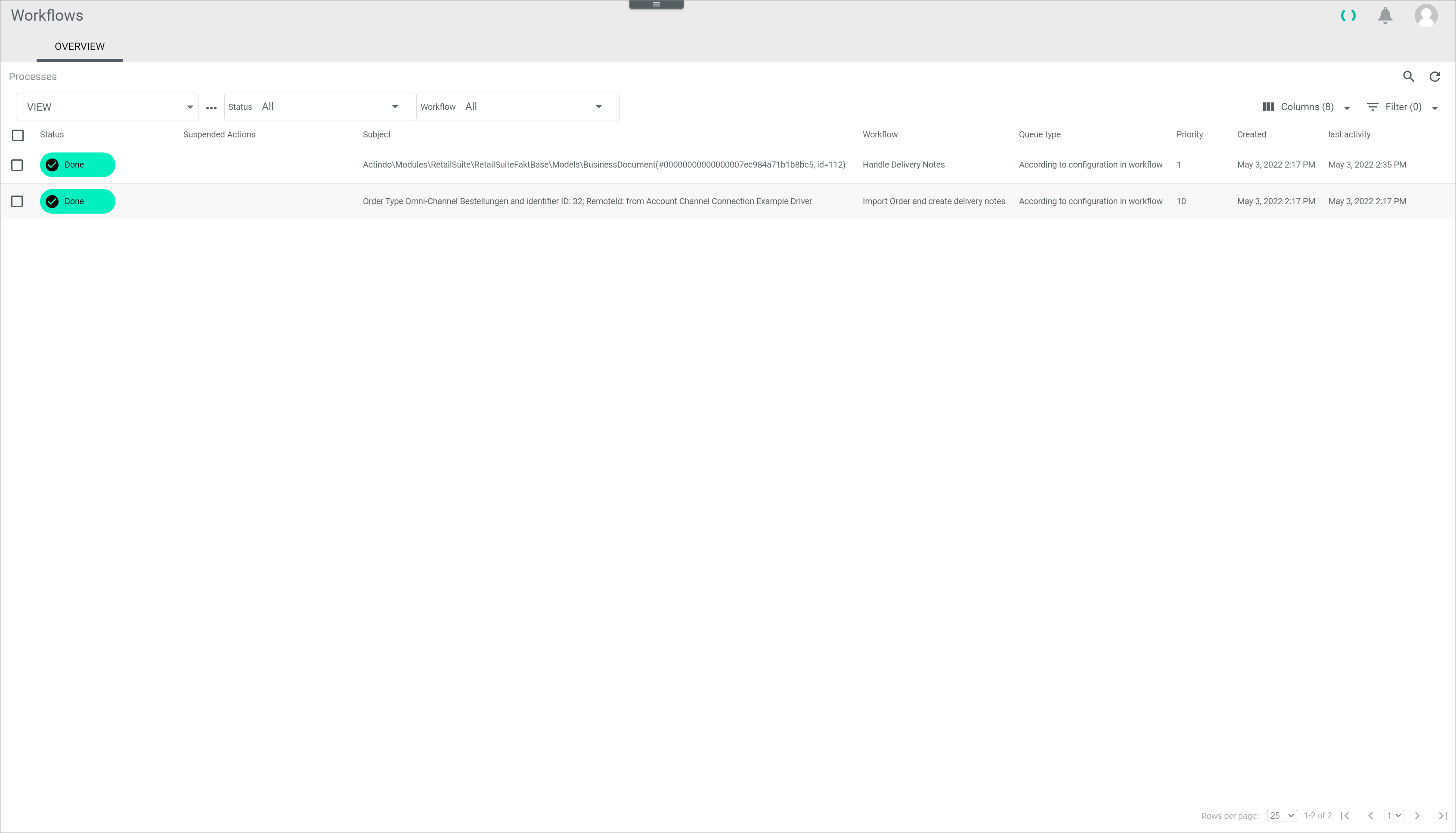
Processes
-
VIEW
Click the drop-down list to select the view. All created views are displayed in the drop-down list. Click the (Points) button to the right of the VIEW drop-down list to display the context menu and create a view.
 -
(Points)
Click this button to the right of the View drop-down list to display the context menu. The following menu entries are available:-
 create
Click this entry to create a view. The Create view window is displayed, see Create view. -
 rename
Click this entry to rename the selected view. The Rename view window is displayed, see Rename view. This menu entry is only displayed if a view has been selected. -
 reset
reset
Click this entry to reset all unsaved changes to the settings of the selected view. This menu entry is only displayed if a view has been selected and any changes have been made to the view settings. -
 publish
Click this entry to publish the view. This menu entry is only displayed if a view has been selected and unpublished. -
 unpublish
Click this entry to unpublish the view. This menu entry is only displayed if a view has been selected and published. -
 save
save
Click this entry to save the current view settings in the selected view. This menu entry is only displayed if a view has been selected.When the settings of a view have been changed, an asterisk is displayed next to the view name. The asterisk is hidden as soon as the changes have been saved.
 delete
Click this entry to delete the selected view. A confirmation window to confirm the deletion is displayed. This menu entry is only displayed if a view has been selected.
-
-
-
Status
Click the drop-down list to select a process status. The following options are available:- All
Select this option to display all processes, regardless of their status. - Ready
Select this option to display the processes that have just been initiated. - In progress
Select this option to display the processes that are currently active (first action is already executed). - Error
Select this option to display the processes that have given an error (a process action has given an error). - Done
Select this option to display the processes that have been completely executed (end place has been reached). - Dead
Select this option to display the processes that have automatically stopped due to a missing input. A dead process cannot be retried. It can only be aborted, that is, manually ended, and re-initiated. - Suspended
Select this option to display the processes that have been manually paused. The remaining process actions are temporarily stopped. - Aborted
Select this option to display the processes that have been manually ended. All process actions currently running are stopped and no longer executed.
- All
-
Workflow
Click the drop-down list to display a specific workflow type. All workflows created in the Workflows menu entry are available in the list. -
 (Search)
Click this button to display the search bar and search for a workflow.The search function can be used to search for a workflow subject and name. At least three characters must be entered.
-
 (Refresh)
Click this button to update the list of workflows. -
 Columns (x)
Click this button to display the columns bar and customize the displayed columns and the order of columns in the list. The x indicates the number of columns that are currently displayed in the list.  Filter (x)
Click this button to display the filter bar and customize the active filters. The x indicates the number of filters that are currently active.
The list displays all processes that are matching the selected values (status and workflow type). Depending on the settings, the displayed columns may vary. All fields are read-only. Click a process in the list to display the Process ID view with a process diagram and detailed information about the selected process.
Select the checkbox to display the editing toolbar. If you click the checkbox in the header, all processes in the list are selected.
Depending on the process status, the editing toolbar displays the following buttons:
-
 (Abort)
Click this button to end the process. This button is displayed if the process status is Error or In progress. When clicking this button, the process status changes to Aborted. -
 (Suspend)
Click this button to suspend the process temporarily. This button is displayed if the process status is In progress. When clicking this button, the process status changes to Suspended. -
 (Start)
Click this button to resume the process. This button is displayed if the process status is Suspended. When clicking this button, process status changes again to In progress. -
Status
Status of the process. The different process statuses are displayed in different colors. The following statuses are possible:- Ready (light gray)
- In progress (blue)
- Error (red)
- Done (green)
- Dead (black)
- Suspended (dark gray)
- Aborted (black)
-
Suspended actions
If the process contains suspended actions, a (Warning) sign is displayed. Click the process to display the individual actions, see Actions.
 -
Subject
Process description. -
Workflow
Name of the corresponding workflow. -
Queue type
Queue type configured in the process. This column displays the queue type name or According to configuration in workflow. -
Priority
Process priority set up in the system. The higher the number, the higher the priority. -
Created
Date and time of creation. -
Last activity
Last date and time an activity was registered in the process. -
ID
Process identification number. The ID number is automatically assigned by the system. -
Owning module
Module that has created the workflow.When a workflow is manually created in the Workflow module, ActindoWorkFlow is displayed. A workflow can also be created automatically by a different module. In this case, the name of the corresponding module is displayed.
-
Created by
Name and user name of the user who initiated the process. - Modified by
Name and user name of the user who modified the process.
Process ID
Workflows > Processes > Tab OVERVIEW > Select a process
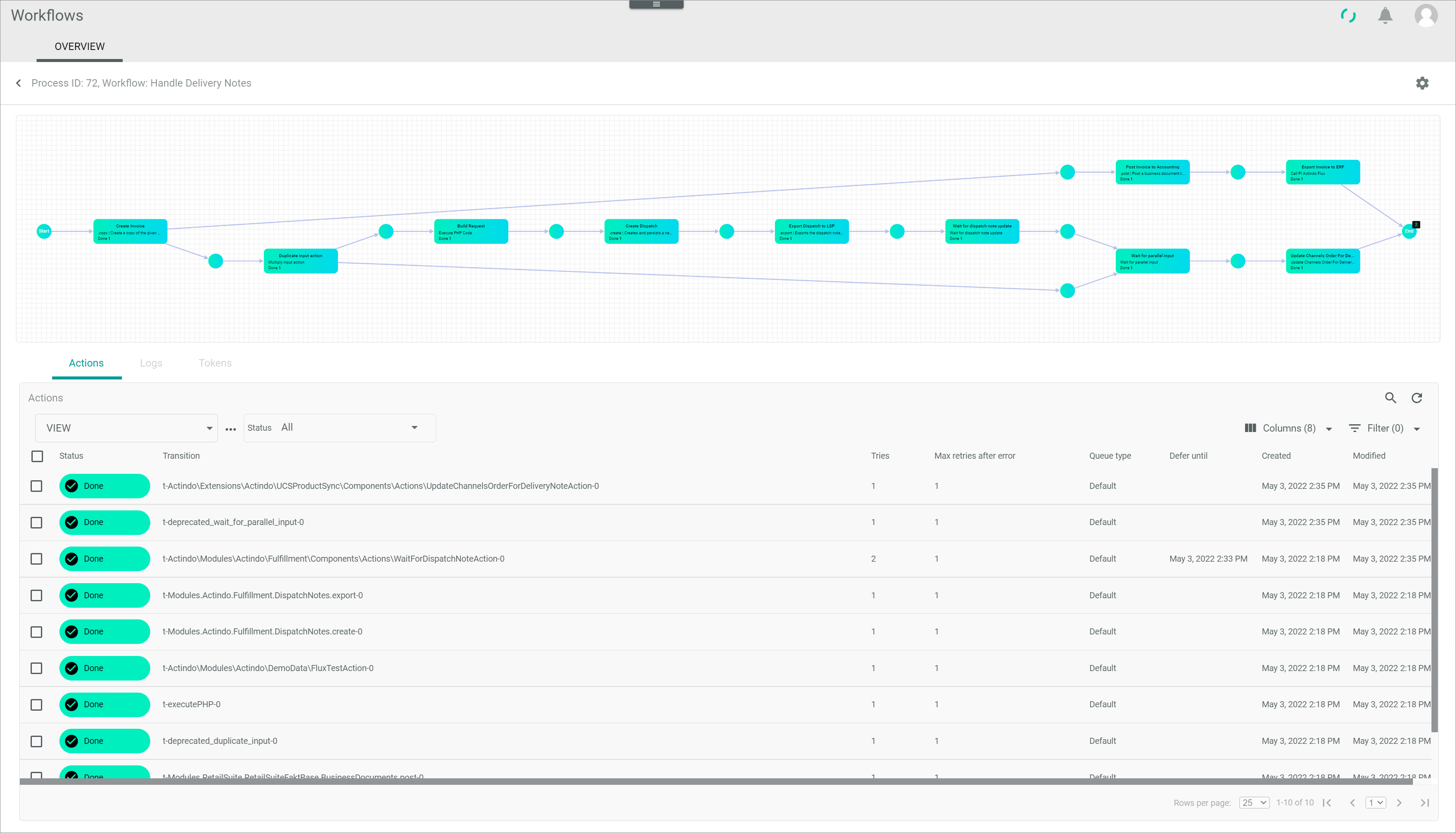
Process ID
-
 (Back)
Click this button to close the Process ID view and return to the list of processes. All changes are rejected. -
Process ID
Process identification number. The ID number is automatically assigned by the system. - Workflow
Name of the workflow.
Actions
Workflows > Processes > Tab OVERVIEW > Select a process > Tab Actions
The Actions tab is selected by default when selecting a process. This tab is an excerpt of the Process actions menu entry, which displays a list of all process actions. When clicking an action in the Process actions view, the selected action is displayed in the Actions tab of the corresponding Process ID view.
-
VIEW
Click the drop-down list to select the view. All created views are displayed in the drop-down list. Click the (Points) button to the right of the VIEW drop-down list to display the context menu and create a view. -
(Points)
Click this button to the right of the View drop-down list to display the context menu. The following menu entries are available:-
create
Click this entry to create a view. The Create view window is displayed, see Create view. -
rename
Click this entry to rename the selected view. The Rename view window is displayed, see Rename view. This menu entry is only displayed if a view has been selected. -
reset
Click this entry to reset all unsaved changes to the settings of the selected view. This menu entry is only displayed if a view has been selected and any changes have been made to the view settings. -
publish
Click this entry to publish the view. This menu entry is only displayed if a view has been selected and unpublished. -
unpublish
Click this entry to unpublish the view. This menu entry is only displayed if a view has been selected and published. -
save
Click this entry to save the current view settings in the selected view. This menu entry is only displayed if a view has been selected.When the settings of a view have been changed, an asterisk is displayed next to the view name. The asterisk is hidden as soon as the changes have been saved.
- delete
Click this entry to delete the selected view. A confirmation window to confirm the deletion is displayed. This menu entry is only displayed if a view has been selected.
-
-
-
Status
Click the drop-down list to select an action status. The following options are available:- All
Select this option to display all actions, regardless of their status. - In progress
Select this option to display the actions that are currently active. - Done
Select this option to display the actions that have been already executed. - Error
Select this option to display the actions that have given an error. - Suspended
Select this option to display the actions that have been manually paused. - Process aborted
Select this option to display the actions included in a process that has been manually ended.
- All
-
(Search)
Click this button to display the search bar and search for an action.The search function can be used to search for a transition name. At least three characters must be entered.
-
(Refresh)
Click this button to update the list of actions. -
Columns (x)
Click this button to display the columns bar and customize the displayed columns and the order of columns in the list. The x indicates the number of columns that are currently displayed in the list. - Filter (x)
Click this button to display the filter bar and customize the active filters. The x indicates the number of filters that are currently active.
The list displays all executed actions that are matching the selected status. Depending on the settings, the displayed columns may vary. All fields are read-only.
Select the checkbox to display the editing toolbar. If you click the checkbox in the header, all actions in the list are selected.
Depending of the process status, the editing toolbar may display different options.
-
 (Retry)
Click this button to retry the action. This button is displayed if the action status is Error. -
(Suspend)
Click this button to suspend the action temporarily. This button is displayed if the action status is In progress. When clicking this button, the action status changes to Suspended. -
(Start)
Click this button to resume the action. This button is displayed if the action status is Suspended. When clicking this button, the action status changes again to In progress. The warning sign in the Suspended actions column of the Processes view is no longer displayed. -
[REMOVE DEFER TIME]
Click this button to skip the defer time preconfigured in the action, if any. The action is then executed immediately. This button is displayed if the action status is In progress.The defer time is preconfigured pro action in the system. If the defer time is removed once, the action is executed immediately. If the action gives an error again, it will be retried once that preconfigured defer time has elapsed.
-
Status
Status of the action. The different process statuses are displayed in different colors. The following statuses are possible:- In progress (blue)
- Done (green)
- Error (red)
- Suspended (dark gray)
- Process aborted (black)
-
Transition
Transition key. -
Tries
Number of times the action execution has been tried. -
Max retries after error
Number of times the action execution must be retried after error. This setting depends on the transition and is usually preconfigured. In the current version, this value can be modified in the Import JSON window, see Import JSON. -
Queue type
Queue type assigned to the action. By default, the Default queue type is assigned.A different queue type can be selected by editing an action in the workflow editor.
-
Defer until
Next point in time when the action is being tried. This setting depends on the action and is not available in all actions. -
Created
Date and time of creation. -
Modified
Date and time of modification. -
ID
Action identification number. The ID number is automatically assigned by the system. - Transition ID
Transition identification number. The ID number is automatically assigned by the system.
Logs
Workflows > Processes > Tab OVERVIEW > Select a process > Tab Logs
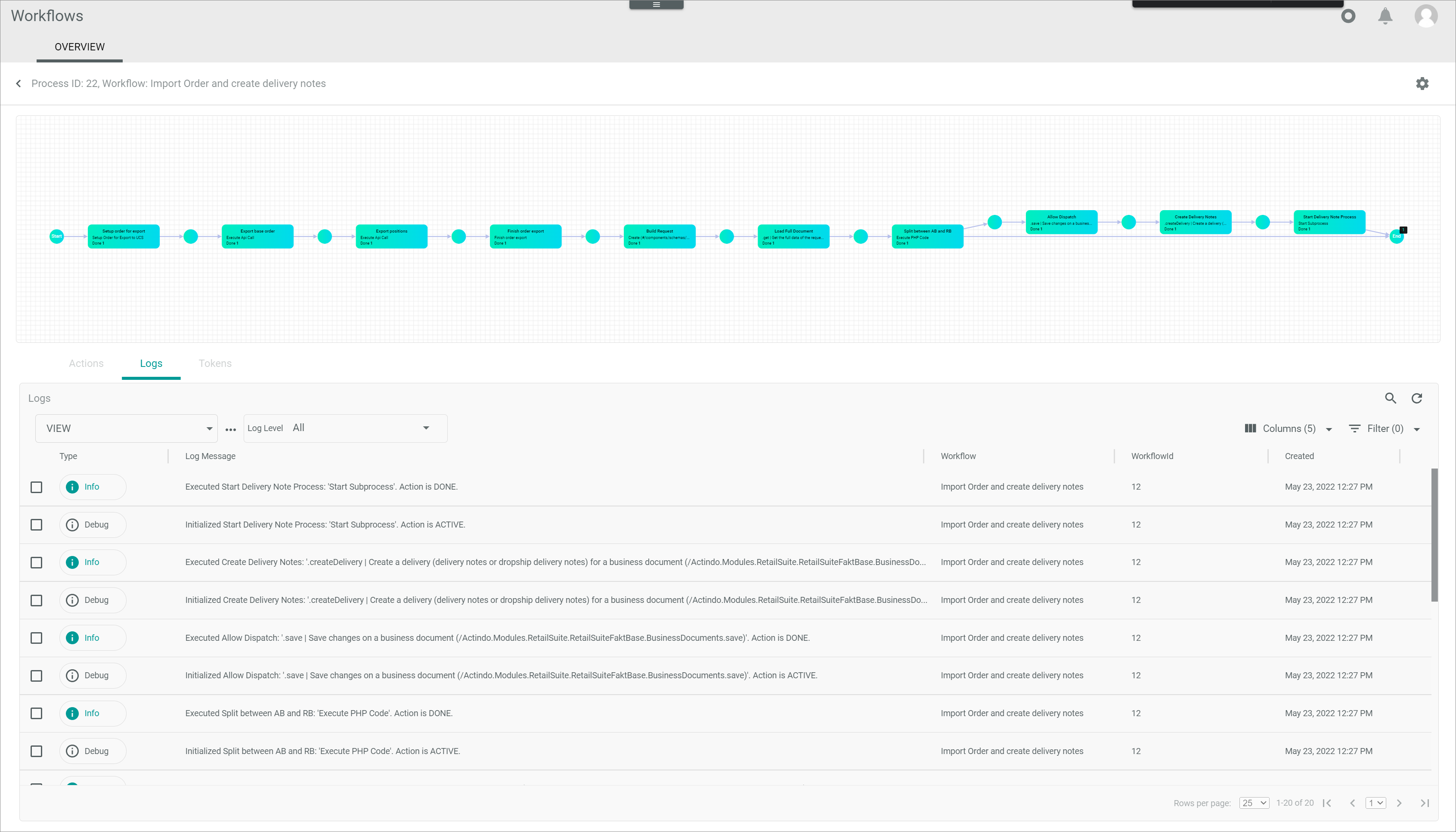
-
VIEW
Click the drop-down list to select the view. All created views are displayed in the drop-down list. Click the (Points) button to the right of the VIEW drop-down list to display the context menu and create a view. -
(Points)
Click this button to the right of the View drop-down list to display the context menu. The following menu entries are available:-
create
Click this entry to create a view. The Create view window is displayed, see Create view. -
rename
Click this entry to rename the selected view. The Rename view window is displayed, see Rename view. This menu entry is only displayed if a view has been selected. -
reset
Click this entry to reset all unsaved changes to the settings of the selected view. This menu entry is only displayed if a view has been selected and any changes have been made to the view settings. -
publish
Click this entry to publish the view. This menu entry is only displayed if a view has been selected and unpublished. -
unpublish
Click this entry to unpublish the view. This menu entry is only displayed if a view has been selected and published. -
save
Click this entry to save the current view settings in the selected view. This menu entry is only displayed if a view has been selected.When the settings of a view have been changed, an asterisk is displayed next to the view name. The asterisk is hidden as soon as the changes have been saved.
- delete
Click this entry to delete the selected view. A confirmation window to confirm the deletion is displayed. This menu entry is only displayed if a view has been selected.
-
-
-
Log level
Click the drop-down list to select a log level. The following options are available:- All
Select this option to display all logs regardless of their level. - Debug
Select this option to display all logs with Debug level. - Info
Select this option to display all logs with Info level. - Notice
Select this option to display all logs with Notice level. - Warning
Select this option to display all logs with Warning level. - Error
Select this option to display all logs with Error level. - Critical
Select this option to display all logs with Critical level. - Alert
Select this option to display all logs with Alert level. - Emergency
Select this option to display all logs with Emergency level.
- All
-
(Search)
Click this button to display the search bar and search for a log. -
(Refresh)
Click this button to update the list of logs. -
Columns (x)
Click this button to display the columns bar and customize the displayed columns and the order of columns in the list. The x indicates the number of columns that are currently displayed in the list. - Filter (x)
Click this button to display the filter bar and customize the active filters. The x indicates the number of filters that are currently active.
The list displays all logs that are matching the selected log level. Depending on the settings, the displayed columns may vary. All fields are read-only. Click a log to display the Log ID view, see Log ID.
-
Type
Log level. The following levels can be displayed:- Debug
- Info
- Notice
- Warning
- Error
- Critical
- Alert
- Emergency
-
Log message
Description of the issue. -
Workflow
Workflow to which the log message refers. -
Workflow ID
Workflow identification number. The ID number is automatically assigned by the system. -
Created
Date and time of creation. -
ID
Log identification number. The ID number is automatically assigned by the system. -
Process
Description of the process to which the log refers. -
Process ID
Identification number of the process to which the log refers. The ID number is automatically assigned by the system. -
Transition
Key of the transition to which the log refers. -
Transition ID
Identification number of the transition to which the log refers. The ID number is automatically assigned by the system. - Created by
Name and user name of the user who initiated the process.
Log ID
Workflows > Processes > Tab OVERVIEW > Select a process > Tab Logs > Select Log message
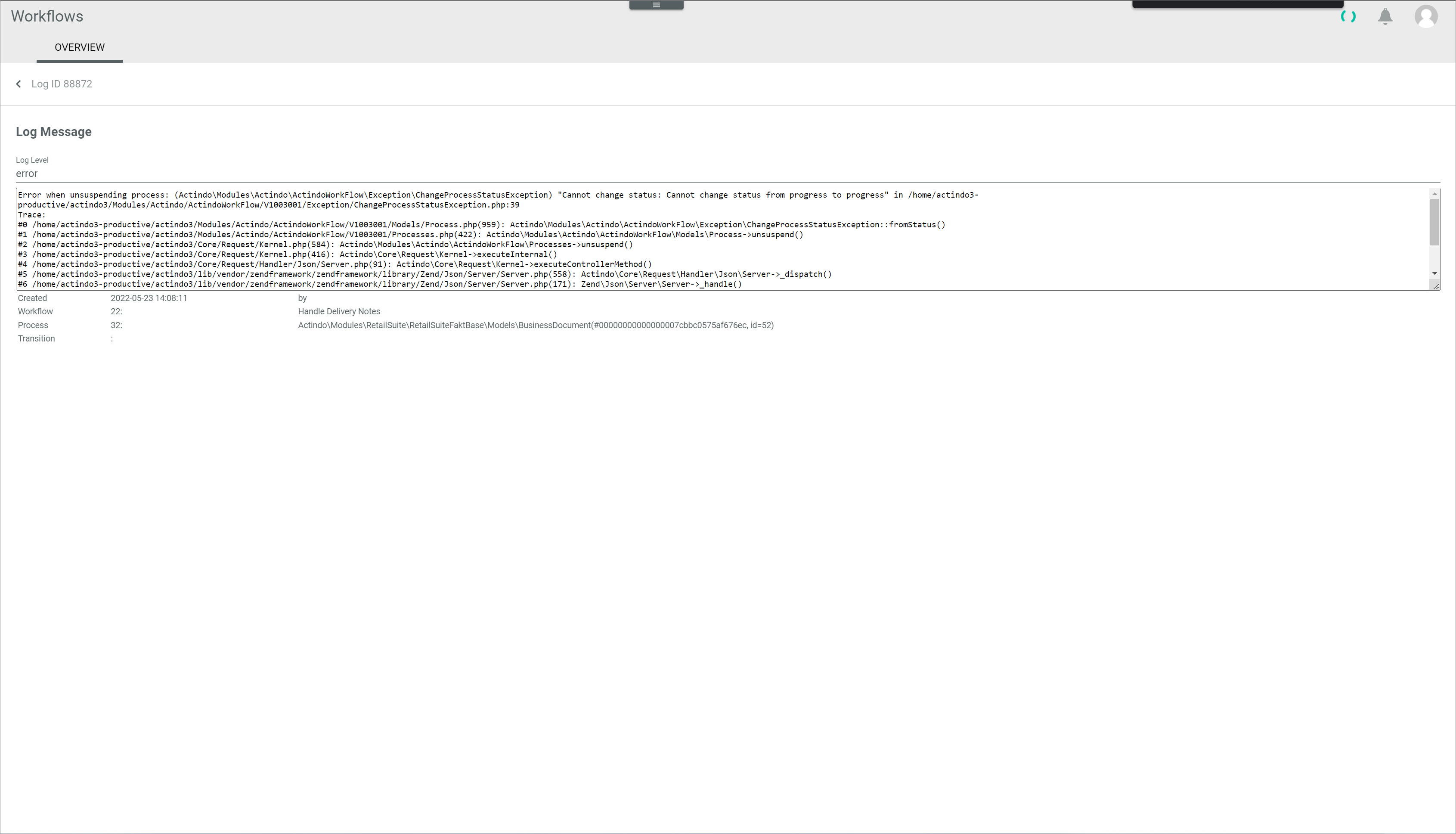
- (Back)
Click this button to close the Log ID view and return to the Logs tab in the Process ID view. All changes are rejected.
For a detailed description of this window and the corresponding functions, see Log ID.
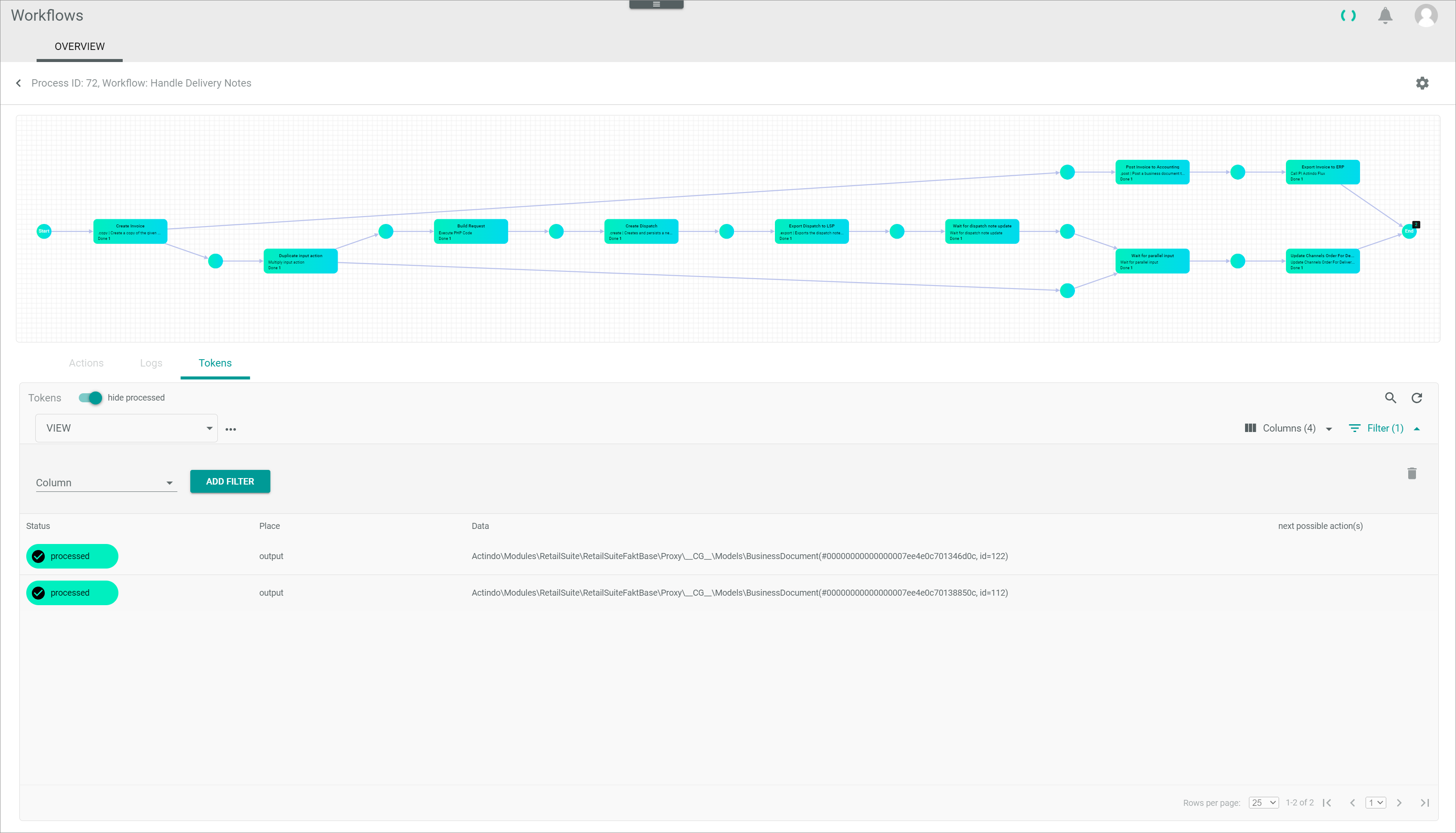
Tokens
Workflows > Processes > Tab OVERVIEW > Select a process > Tab Tokens
-
 Hide processed
Disable this toggle to display all tokens, including the ones that have already been processed. Enable the toggle to hide all processed tokens. By default, this toggle is enabled. -
VIEW
Click the drop-down list to select the view. All created views are displayed in the drop-down list. Click the (Points) button to the right of the VIEW drop-down list to display the context menu and create a view. -
(Points)
Click this button to the right of the View drop-down list to display the context menu. The following menu entries are available:-
create
Click this entry to create a view. The Create view window is displayed, see Create view. -
rename
Click this entry to rename the selected view. The Rename view window is displayed, see Rename view. This menu entry is only displayed if a view has been selected. -
reset
Click this entry to reset all unsaved changes to the settings of the selected view. This menu entry is only displayed if a view has been selected and any changes have been made to the view settings. -
publish
Click this entry to publish the view. This menu entry is only displayed if a view has been selected and unpublished. -
unpublish
Click this entry to unpublish the view. This menu entry is only displayed if a view has been selected and published. -
save
Click this entry to save the current view settings in the selected view. This menu entry is only displayed if a view has been selected.When the settings of a view have been changed, an asterisk is displayed next to the view name. The asterisk is hidden as soon as the changes have been saved.
- delete
Click this entry to delete the selected view. A confirmation window to confirm the deletion is displayed. This menu entry is only displayed if a view has been selected.
-
-
-
(Search)
Click this button to display the search bar and search for a token.The search function can be used to search for a token ID. At least three characters must be entered.
-
(Refresh)
Click this button to update the list of tokens. -
Columns (x)
Click this button to display the columns bar and customize the displayed columns and the order of columns in the list. The x indicates the number of columns that are currently displayed in the list. - Filter (x)
Click this button to display the filter bar and customize the active filters. The x indicates the number of filters that are currently active.
The list displays all tokens if the Hide processed toggle is disabled. Depending on the settings, the displayed columns may vary. All fields are read-only.
-
Status
Token status. The different statuses are displayed in different colors. The following statuses are possible:- Processed (green)
- Being processed (blue)
- Error (red)
- Unprocessed (white)
-
Place
Name of the place where the token is currently processed. The start place name is input, the end place name output. -
Data
Type of data contained in the token. -
Next possible action(s)
Next compatible action(s) that may consume this token. -
ID
Token identification number. The ID number is automatically assigned by the system. -
Place ID
Place identification number. The ID number is automatically assigned by the system. - Process action ID
Action identification number. The ID number is automatically assigned by the system.
Create view
Workflows > Processes > Tab OVERVIEW > Button Points > Menu entry create
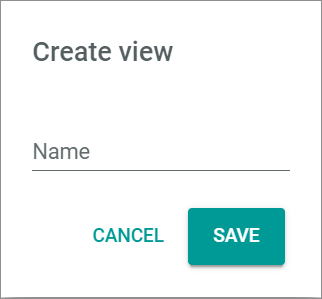
For a detailed description of this window and the corresponding functions, see Create view.
Rename view
Workflows > Processes > Tab OVERVIEW > Button Points > Menu entry rename
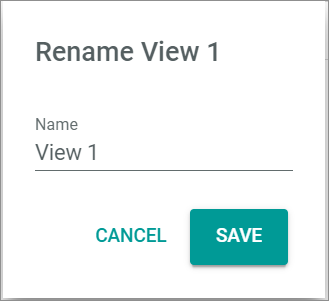
For a detailed description of this window and the corresponding functions, see Rename view.